
Financial Report 2025
In 2025, Public Health Sudbury & Districts strengthened its focus on the work that matters most for community health. Operating within a challenging fiscal environment and growing community needs, the agency focused resources on activities with the greatest potential to improve health outcomes and strengthen communities. This included vaccination, the control of infectious diseases, and engaging with our diverse communities. Additionally, to build sustainability at a time when funding does not keep pace with inflation, the agency made initial investments towards technology-driven efficiencies and a strengthened workforce.
Collaboration also played an important role. Throughout the year, Public Health worked with key partners to improve health and well-being across our large and diverse service area. For example, Public Health developed multiple partnerships to support oral health, including collaborating with Wikwemikong Health Centre to co-design and plan culturally-appropriate dental screening clinics for children. Beyond oral health, partnerships also supported environmental health initiatives, including work with the City of Greater Sudbury to develop an adverse air quality response plan. Public Health also collaborated with co-leads from Shkagamik-Kwe Health Centre and Sudbury District Restorative Justice, as well as other community partners, to advance Planet Youth Up North in the Greater Sudbury and La Cloche areas, supporting its implementation around local community needs.
The value of strong partnerships was made evident during the measles outbreak in 2025. Through preparedness, timely action, in-person presence in communities, and strong collaboration with health care partners and community leaders, Public Health protected children and supported families. These efforts reflected the need for a trusted, local, and community-centred public health system. This and other examples of Public Health’s work and impact are highlighted in the 2025 Year-in-Review: Lasting Ripples of Impact. The financial information presented in this report demonstrates how resources were used to achieve meaningful results and deliver lasting impact for the people and communities we serve.
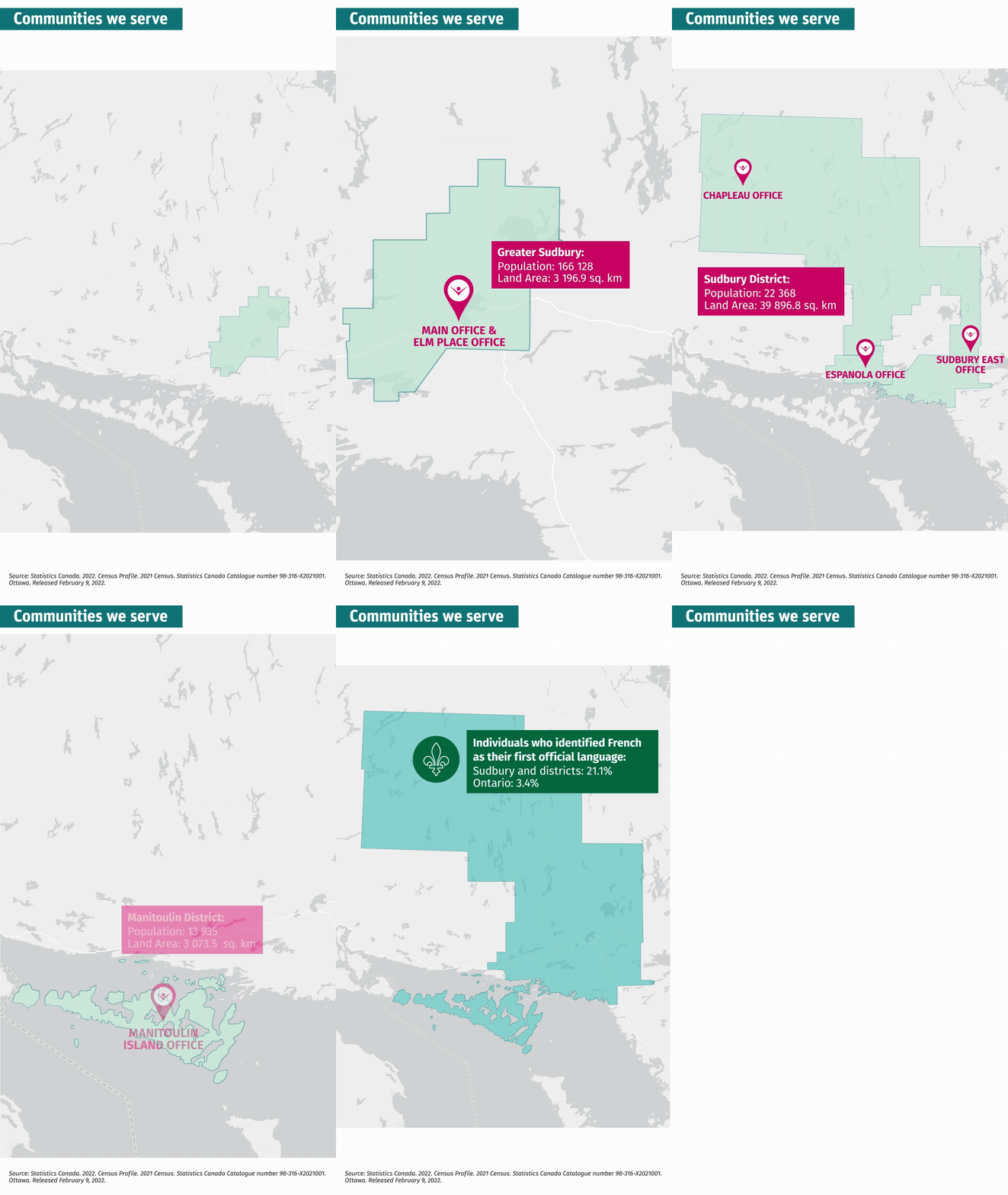
Public Health Sudbury & Districts covers a land area of 46 167.2 km2 and operates within the Anishinabek and Cree territories. The service area is subject to the Robinson-Huron Treaty and Treaty 9 to the north.
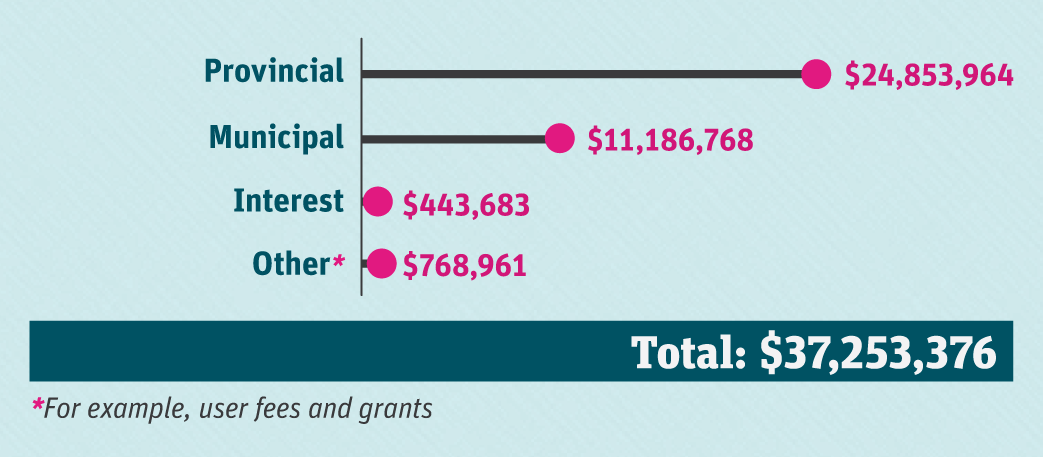
Revenue sources:
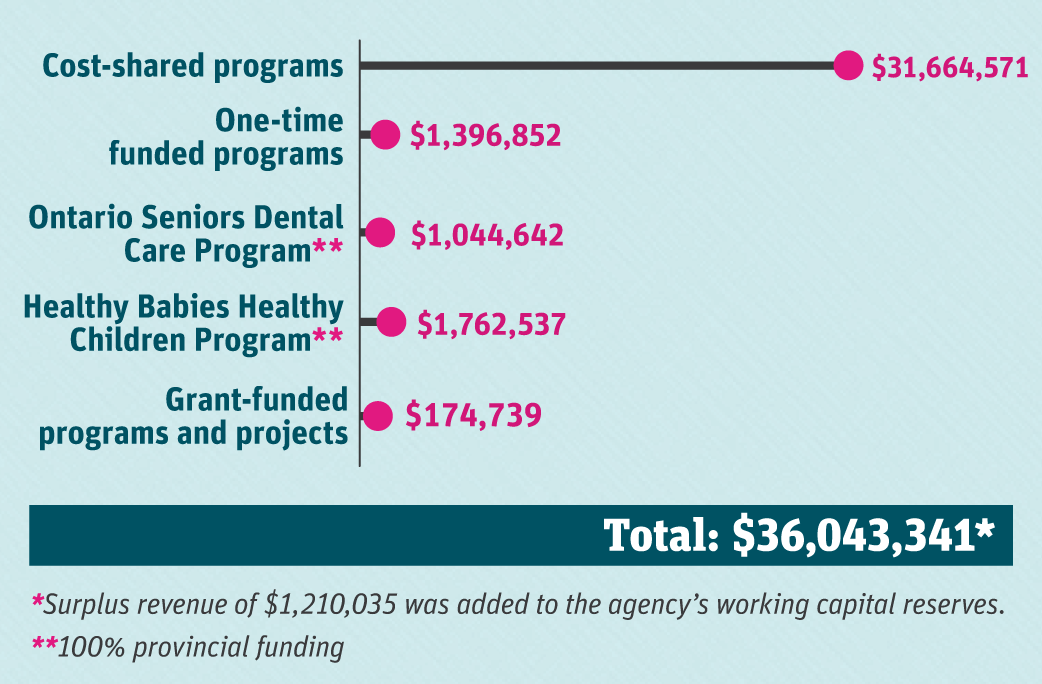
Operating expenses:
Although the provincial government’s policy is to fund 75% of cost-shared expenditures, the actual provincial funding received in 2025 covered only 62.3% of Public Health Sudbury & Districts’ cost-shared expenditures, which put an additional burden on municipalities to make up the rest.
Detailed information is available in the 2025 Audited Financial Statement (PDF, 346 KB) (English only).
This item was last modified on September 17, 2026