
Drug warning: Increase in suspected drug poisonings (overdoses)
The Community Drug Strategies have received reports of an increase in the number of drug poisonings (overdoses) and unexpected reactions from the use of substances in the Sudbury and districts area.
While we cannot confirm the substance(s) causing the overdoses, this situation serves as an important reminder to the community that street drugs may be cut or mixed with substances such as benzos (benzodiazepines), xylazine, fentanyl, or carfentanil. Frontline workers warn that more toxic substances may be circulating locally, including a potent bluish-green looking substance being referred to as “down”. Workers report witnessing heavy “nods” accompanied by long periods of sedation.
An overdose occurs when a person uses a substance and their body is unable to handle the effects. As a result, the brain is unable to control basic life functions. The person might pass out, stop breathing, or experience a seizure. Overdoses can be fatal and non-fatal.
Prevent overdoses to save lives:
- Avoid mixing drugs, including prescribed, over the counter, and illegal drugs.
- Avoid drinking alcohol while using other drugs.
- Use caution when switching substances: start with a lower dose than you usually would.
- If you have not used in a while, start with a lower dose. Your tolerance may be lower.
- When using substances, consider the following options:
- Avoid using drugs when you are alone.
- Carry a naloxone kit. Know how to use it (PDF).
- Call 911 if you suspect an overdose.
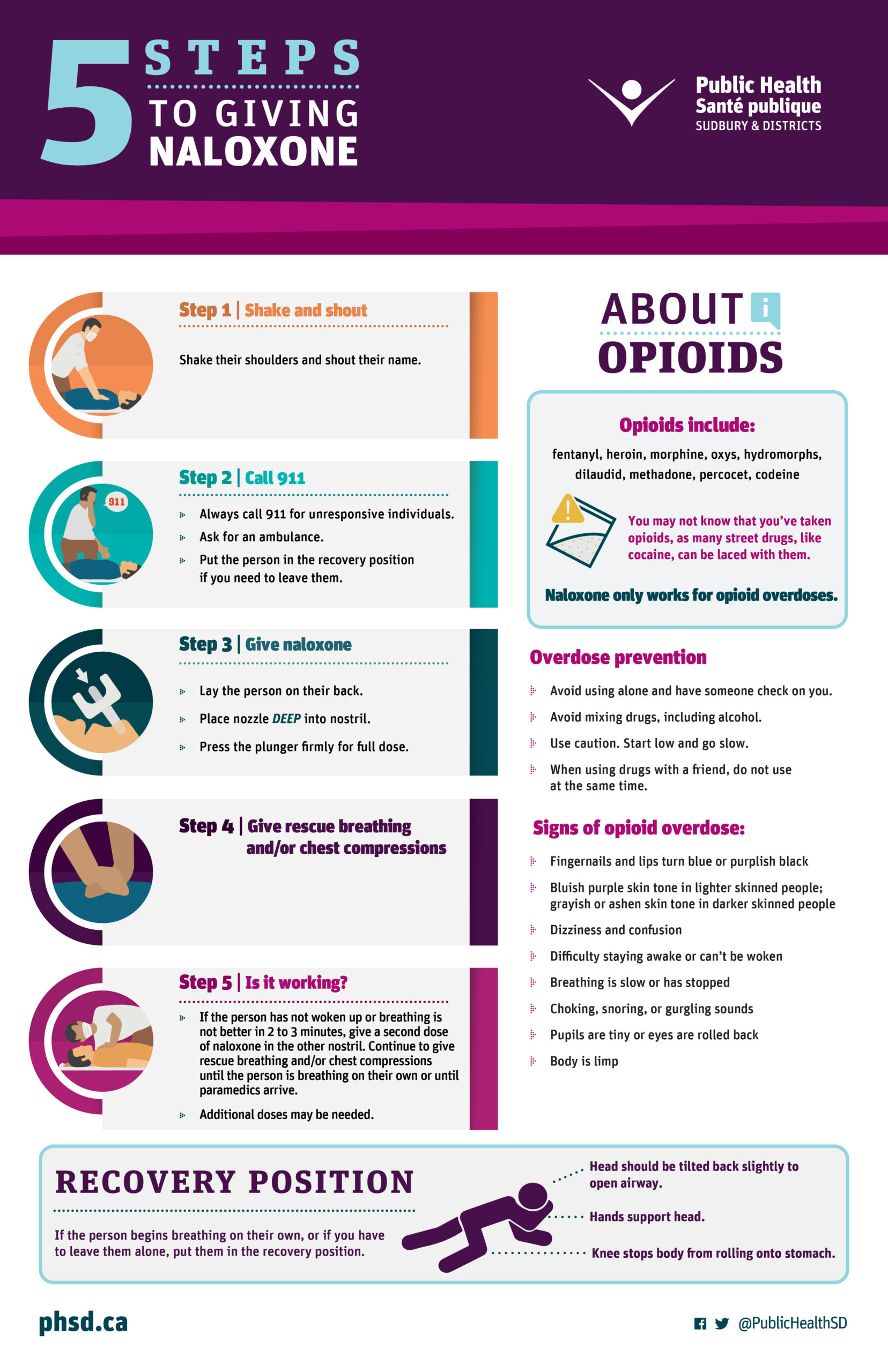
Opioid overdose symptoms include:
- fingernails and lips turn blue or purplish black
- skin turns bluish purple, grayish, or ashen, depending on skin tone
- dizziness and confusion
- the person can’t be woken up
- choking, gurgling, or snoring sounds
- slow, weak, or no breathing
- drowsiness or difficulty staying awake
Due to benzodiazepines (benzos) toxicity, an overdose may last for hours and look like:
- extreme sleepiness or passing out
- poor balance and movement control
- slurred speech
- blackouts and memory loss
How to respond to an overdose:
- GIVE NALOXONE. This will help reverse an opioid overdose and will do no harm if the overdose is not due to opioids. This may improve breathing, but the person may not regain consciousness due to sedation. Additional doses maybe needed.
- Call 911 to get medical help and keep monitoring breathing. Stay with the person until help arrives.
- If the person is unconscious, place them in the recovery position.
Where to get naloxone?
For a free naloxone kit, contact The Point at Public Health Sudbury & Districts, Réseau Access Network, Sudbury Action Centre for Youth (SACY), or ask your local hospital or pharmacy. Or, visit www.ontario.ca/page/get-naloxone-kits-free.
Be cautious if using drugs and please distribute this information widely to help save lives.
This item was last modified on March 4, 2024
Drug warning: Increase in suspected drug poisonings (overdoses)
The Community Drug Strategies have received reports of an increase in the number of drug poisonings (overdoses) and unexpected reactions from the use of substances in the Sudbury and districts area.
While we cannot confirm the substance(s) causing the overdoses, this situation serves as an important reminder to the community that street drugs may be cut or mixed with substances such as benzos (benzodiazepines), xylazine, fentanyl, or carfentanil. Frontline workers warn that more toxic substances may be circulating locally.
An overdose occurs when a person uses a substance, and their body is unable to handle the effects. As a result, the brain is unable to control basic life functions. The person might pass out, stop breathing, or experience a seizure. Overdoses can be fatal and non-fatal.
Prevent overdoses to save lives:
- Avoid mixing drugs, including prescribed, over the counter, and illegal drugs.
- Avoid drinking alcohol while using other drugs.
- Use caution when switching substances: start with a lower dose than you usually would.
- If you have not used in a while, start with a lower dose. Your tolerance may be lower.
- When using substances, consider the following options:
- Avoid using drugs when you are alone.
- Carry a naloxone kit. Know how to use it. (PDF)
- Call 911 if you suspect an overdose.
Opioid overdose symptoms include:
- fingernails and lips turn blue or purplish black
- skin turns bluish purple, grayish, or ashen, depending on skin tone
- dizziness and confusion
- the person can’t be woken up
- choking, gurgling, or snoring sounds
- slow, weak, or no breathing
- drowsiness or difficulty staying awake
Stimulant overdose symptoms include:
- seizures
- drooling or frothing from the mouth
- limb spasms or rigidity
- tightening or pain in the chest
- not breathing or shallow breathing
- signs of a stroke such as the inability to talk clearly, losing feelings in the face, arms, or legs on one side of the body
Due to benzodiazepines (benzos) toxicity, an overdose may last for hours and look like:
- extreme sleepiness or passing out
- poor balance and movement control
- slurred speech
- blackouts and memory loss
How to respond to an overdose:
- GIVE NALOXONE. This will help reverse an opioid overdose and will do no harm if the overdose is not due to opioids. This may improve breathing, but the person may not regain consciousness due to sedation. Additional doses maybe needed.
- Call 911 to get medical help and keep monitoring breathing. Stay with the person until help arrives.
- If a stimulant overdose is suspected:
- Try to keep the person awake. If they are anxious, try to get them to slow down and relax.
- Cool the person down with a damp washcloth on their forehead.
- If the person is having a seizure, remove any sharp or dangerous items around them.
- If the person is unconscious, place them in the recovery position.
Where to get naloxone?
For a free naloxone kit, contact The Point at Public Health Sudbury & Districts, Réseau Access Network, Sudbury Action Centre for Youth (SACY), or ask your local hospital or pharmacy. Or, visit www.ontario.ca/page/get-naloxone-kits-free.
Be cautious if using drugs and please distribute this information widely to help save lives.
This item was last modified on February 21, 2024
Addressing the toxic drug crisis: Report highlights priorities for Greater Sudbury
Today, Public Health Sudbury & Districts released a detailed report, Honouring Voices, Embracing Perspectives, Moving Forward: A Summary Report on the Greater Sudbury Summit on Toxic Drugs (PDF). The report documents the insights and priorities from the December 7 and 8, 2023, Greater Sudbury Summit on Toxic Drugs (Summit).
“The Summit was organized based on an understanding that we require unified efforts to stop the preventable deaths and suffering caused by toxic drugs in Greater Sudbury,” said Dr. Penny Sutcliffe, Medical Officer of Health for Public Health Sudbury & Districts. “Like puzzle pieces coming together, the Summit brought diverse leaders and perspectives together, including those with lived and living experience of substance use. We were challenged to use our heads and our hearts to better understand the human impacts and to figure out what more can be done. With an improved shared understanding, we are now better equipped to stop things that don’t work and ramp up things that do—focusing our energy on saving lives,” added Dr. Sutcliffe.
Summit participants identified overarching priorities including the need to address structural stigma, enhance collaboration, remove barriers to access, and secure sufficient funding for long-term impact. They also mapped out priority actions for the three streams of the Summit. The number one priority for each stream is:
- Health promotion: Create a comprehensive strategy for youth that fosters resilience, ensuring that the voices of youths guide the development.
- Wrap-around supports: Increase supportive, transitional, and affordable housing.
- Substance use care: Identify a lead agency to assist in service navigation for people who use drugs and to highlight gaps in these services, enabling organizations to collectively address them.
Indigenous teachings were incorporated in all aspects of the Summit and are highlighted in the report—recognizing the importance of traditional practices and cultural approaches in addressing substance use.
“The Summit was a great opportunity for networking with people from all walks of life who share a commitment to addressing the toxic drug crisis. I am encouraged and hopeful for positive change to come,” said James Gough, Chair of the People with Lived and Living Experience Advisory Committee for the Greater Sudbury Summit on Toxic Drugs.
“The work is not done. The value of bringing people together to share ideas and hear from those most affected by the crisis allowed us to collectively get behind evidence-based solutions that can be tailored to Greater Sudbury. While individually, each organization is instrumental in actioning priorities contained in the report—together, we must ensure we are coordinated and accountable to our entire community and move toward a hopeful, brighter, and safer future for all,” said Ed Archer, Chief Administrative Officer at the City of Greater Sudbury.
Throughout the day-and-a-half event, participants generated over 150 ideas to address the toxic drug crisis. The report summarizes this collaboration among nearly 200 leaders—with representation from over 70 agencies—all working to collectively improve conditions for those who use substances in Greater Sudbury.
As executive sponsors and co-chairs of the Coordinating Committee for the Greater Sudbury Summit on Toxic Drugs, Dr. Penny Sutcliffe and Ed Archer commend the extensive collaboration of everyone involved in determining next steps, processes, and structures to mitigate harms and ensure accountability in our community.
The Community Drug Strategy (CDS) for the City of Greater Sudbury will advance the Summit priorities, while simultaneously assessing its own operations to better align with the three streams of the Summit. The CDS will also explore creating a connection to community partners to ensure efforts are aligned, linked-up, and accountable. The meaningful inclusion of Indigenous voices and people with lived and living experiences will be key to fulfill the priorities.
Read the full Honouring Voices, Embracing Perspectives, Moving Forward: A Summary Report on the Greater Sudbury Summit on Toxic Drugs at www.phsd.ca/toxic-drug-summit.
This item was last modified on January 31, 2024
Public Health shares tips on preventing frostbite and hypothermia
With cold weather being a fact of life for northerners, Public Health Sudbury & Districts would like to remind everyone to take appropriate precautions against the cold. Injuries related to the cold can happen at a wide range of temperatures but occur more quickly when it’s colder. Frostbite and hypothermia are the most common and preventable injuries.
Suffering frostbite means that skin has actually frozen. In addition to feeling cold, the skin can feel numb and appear white. In more severe cases the area becomes hard, waxy, and can turn white or dark. Body extremities are often the first to be frozen/frostbitten. Additionally, there is a condition called frostnip where a person’s skin may appear shiny and rosy. This is a sign that frostbite may occur shortly. If you see these signs, move to a warmer environment, or protect the skin with layers of clothing.
Hypothermia is a life-threatening condition. It occurs when the body is exposed to the cold for a long time and loses more heat than it can generate. The individual could be shivering, drowsy, confused, and have problems speaking, loss of coordination, and pale and bluish lips. People showing signs and symptoms of hypothermia will begin shivering, but this sign can decrease and disappear in later stages.
For more information and emergency treatment of frostbite and hypothermia, Public Health suggests reviewing the Cold-Related Emergencies: Staying Warm and Safe in Canadian Winters – Canadian Red Cross or the St. John Ambulance First Aid Reference Guide starting at Page 233.
To prevent cold related injuries:
- Check the weather forecast and plan accordingly.
- Limit the amount of time you spend in the cold.
- Dress in layers, with a wind-resistant outer layer. Wear a hat and mittens or insulated gloves. Keep your face warm by wearing a scarf, neck tube, or face mask.
- Wear warm, waterproof footwear.
- Seek shelter from the wind.
- Stay active. Walking or running will help warm you by generating body heat but try to avoid sweating.
- Stay dry. Remove wet clothing if possible and remove or ventilate outer layers of clothing if you are sweating.
- Speak to your doctor or pharmacist as certain medications can make you more susceptible to the cold.
On very cold days, check in on neighbours who may be vulnerable to cold due to age, living conditions, health conditions, reduced mobility, or isolation.
People who are unhoused can spend long periods outside and can suffer increased effects from the cold. This can be due to the following issues, as well as other factors:
- inadequate clothing
- malnutrition
- a previous cold-weather injury
- history of heart disease or diabetes
The possibility of severe, non-fatal impacts of cold weather—such as amputation or extended hospitalizations—increases for people who are unhoused. To help people in these situations, consider making a financial contribution or donating warm blankets, warm socks, mittens, hats, long underwear, footwear, and outerwear to local aid groups.
For more information on preventing cold weather injuries, please visit www.phsd.ca or call 705.522.9200, ext. 464 (toll-free 1.866.522.9200).
This item was last modified on January 17, 2024
Simple precautions needed to stop rising reports of respiratory and enteric illness
Recent increases in respiratory and enteric illnesses have led to several outbreaks being declared in hospital and long-term care and retirement homes that put patients at increased risk of illness. Based on its weekly respiratory illness surveillance, Public Health Sudbury & Districts is also reporting high case activity and very high local hospital activity for respiratory illness, and enteric illnesses have been increasing over the winter months.
“Respiratory illnesses, like COVID-19 and influenza, can affect all of us, but these can lead to much more severe health complications for people in hospitals, long-term care homes, retirement homes, and other congregate care settings,” said Jonathan Groulx, a manager in Public Health’s Health Protection Division. “The very young, elderly, and people with certain medical conditions are at higher risk of worse health outcomes, and each of us can take simple precautions to stop the spread of respiratory and enteric illness and keep our community safe,” said Groulx.
Protect yourself and others, and prevent the spread of illness:
- Wash your hands frequently and thoroughly for at least 15 seconds or use an alcohol-based hand rub if your hands are clean and a handwashing basin is not available.
- Cover your coughs and sneezes with a tissue and discard used tissues immediately in the garbage and wash your hands.
- If you are at higher risk of severe outcomes from infection, consider wearing a mask in crowded indoor public settings.
- Stay up to date with your COVID-19 vaccinations. The vaccine protects you from severe illness and hospitalization, and builds longer term protection against the virus.
- Get vaccinated for influenza, pneumococcal disease, and respiratory syncytial virus (RSV) if eligible, and stay up to date with vaccinations.
- Stay home when you are sick. If you must leave your home, for example, for testing or medical care, wear a well-fitted mask.
- Follow the guidelines of any hospitals or long-term care or retirement homes you are visiting regarding masking, handwashing, and avoid visiting residents or patients if not feeling well.
Public Health works closely with hospitals, long-term care homes, retirement homes, and other congregate care settings to ensure infection prevention and control measures are in place and to help control outbreaks of illness and minimize spread to people who are most vulnerable.
Public Health publishes weekly information online about local activity levels of respiratory illness, including COVID-19, influenza, and RSV, and posts information about all active outbreaks in the Sudbury and Manitoulin districts related to respiratory and enteric illness.
For more information on respiratory and enteric illness and precautions to take, please visit phsd.ca or call Public Health Sudbury & Districts at 705.522.9200 (toll-free 1.866.522.9200).
This item was last modified on January 4, 2024
Greater Sudbury Summit on Toxic Drugs concludes, paves the way for collective action on toxic drug crisis
The conclusion of the two-day Greater Sudbury Summit on Toxic Drugs (Summit) marks a milestone and critical point for collective action. This first-of-its-kind event for the city has set the stage for a more unified community response to the toxic drug crisis—emphasizing collaboration, compassion, and evidence-based approaches.
“Just as every person who uses substances has their own path and unique needs, we understand there is no one-size-fits-all solution to this crisis. This is a complex issue. If it were easy and there were ready-made solutions, we wouldn’t have had the need to gather over these two days. We are grateful to participants for their eagerness to listen, coming ready to discuss ideas, and for their openness to others’ perspectives,” said René Lapierre, Chair for the Board of Health for Public Health Sudbury & Districts.
Over the one- and one-half days, participants heard that the number of people dying from opioid toxicity increased by over 500% from 2017 to 2020 and that accidental overdoses are the leading cause of deaths in people under the age of 50. These numbers were underscored by the powerful stories and comments shared by those with lived and living experience of the toxic drug crisis who shared their pain, about losing loved ones, and losing connection to community, work, and family.
The Summit brought people into the same room to gain a shared understanding and help open hearts and minds to create more connections to build hope and optimism.
Opportunities identified for further exploration to create a more comprehensive community response to the toxic drug crisis include ideas around safer supply, safer spaces for people to use substances, supportive housing, better care coordination and collaboration of care pathways, a centre for excellence in mental health and substance use, and at the core of everything, connection, respect for those who use substances, the elimination of structural stigma, and a philosophy of do no harm.
The collaboration at the Summit will hopefully lead to the realization of the Summit vision and guide Greater Sudbury toward a healthier and safer future. Public Health Sudbury & Districts and the City of Greater Sudbury are grateful to everyone who played a role in organizing, contributing to, and participating in creating a safe space for open discussion to explore innovative ideas to prevent drug-related harm and deaths.
The City of Greater Sudbury, Public Health Sudbury & Districts, Health Sciences North, the Canadian Mental Health Association, Réseau ACCESS Network, and the Greater Sudbury Police Service, as well as the Indigenous community and persons with lived and living experience will review the recommendations and learnings from the Summit and among other things, consider a process and community structure to carry this important work forward in a coordinated manner. Boards, organizations, and individuals are asked to continue to work together to action the opportunities identified as a result of the event. In the new year, a comprehensive report will be published to provide details on discussions, decisions, and opportunities in tackling this complex issue. For more information on the Summit, visit www.phsd.ca/clinics-classes-events/toxic-drug-summit.
This item was last modified on December 8, 2023
Greater Sudbury community leaders united in addressing drug toxicity harms and deaths
Close to 200 community leaders convened today and will again tomorrow for the Greater Sudbury Summit on Toxic Drugs (Summit). Over the two-day Summit, participants will hear from over 35 experts (PDF, 6 MB) and engage in dialogue to review the magnitude of—and response to—the toxic drug crisis.
According to the Office of the Chief Coroner for Ontario, people from across Northern Ontario are dying from opioid-related deaths at a rate almost three times higher than the rest of the province (PDF, 3 MB). These rates remain especially high in Greater Sudbury despite many sectors working on substance-use prevention, harm reduction, treatment, and enforcement. In response to this escalating and complex crisis, the City of Greater Sudbury, the Board of Health for Public Health Sudbury & Districts, and the Greater Sudbury Police Service all endorsed motions calling for a local leadership summit on the drug toxicity crisis.
The Summit is unfolding over two days, with an agenda that includes diverse viewpoints—grounded in a profound respect for individuals with lived and living experience of the toxic drug crisis and a deep appreciation for Indigenous perspectives, given how deeply the tragedy is affecting Indigenous peoples.
To begin the Summit, participants heard presentations from Public Health Sudbury & Districts and the Ontario Drug Policy Research Network which highlighted the statistics and the characteristics of the crisis. Following these presentations, those directly impacted by the effects of drug toxicity shared their impactful, personal stories.
A comprehensive overview of the factors impacting individuals who use substances was covered by three panel discussions. These panels covered health promotion and stigma (PDF), wrap-around services (PDF), and substance use care (PDF), and provided insight into how these three approaches are all critical for a successful community response to such a complex issue. Participants then engaged in group discussions to assess what they heard in search of solutions and actions to combat the crisis. Participants were also provided with training in life-saving naloxone administration and took part in a sweetgrass braid teaching and a purple ribbon ceremony.
Tomorrow, Summit participants will reconvene to further their understanding of the crisis and what can be done locally. They will hear from presenters from Wiikwemkoong Unceded Territory on Manitoulin Island, experts from British Columbia, local industry, and Public Health Ontario. They will then work with the emerging themes from all the discussions and presentations to identify potential actions, priorities, and next steps to save lives and create a healthier, safer community.
Public Health Sudbury & Districts (Public Health) published an executive summary on how Northern Ontario has been and continues to be disproportionately impacted by the toxic drug crisis. In the new year, Public Health will publish a final report detailing discussions, decisions, and next steps resulting from the Summit. For more information, visit www.phsd.ca/clinics-classes-events/toxic-drug-summit.
This item was last modified on December 7, 2023
Vaccination opportunities: December, 2023
COVID-19 vaccination
Public Health Sudbury & Districts continues to offer the updated XBB.1.5-containing COVID-19 vaccines throughout the month of December. The XBB-containing formulations better protect you against the Omicron XBB subvariant circulating across our communities. See all Public Health clinic opportunities at phsd.ca/COVID-19/vaccine-clinics. In the month of December, appointments and walk-in vaccination opportunities remain available.
Please note, that beginning in January 2024, Public Health Sudbury & Districts will no longer issue monthly COVID-19 vaccine clinic public service announcements, but will continue to post and promote vaccination opportunities on our website and our social media. Information on how to book a COVID-19 vaccine appointment will be shared in January. This approach is intended to align COVID-19 vaccination efforts with other routine vaccination programs, such as measles, rubella, and tetanus. Learn more about immunizations, including how to book appointments.
Additional opportunities to receive a COVID-19 vaccine may also be available through select primary care providers and at participating pharmacies. Visit covid-19.ontario.ca/vaccine-locations for pharmacy locations that offer the COVID-19 vaccine.
As we approach that time of year when we begin to see rising numbers of respiratory illnesses, Public Health Sudbury & Districts continues to recommend that you stay up to date with your respiratory vaccines, including COVID-19 and influenza, to build long-term protection against severe disease and hospitalization.
Public Health Sudbury & Districts provides information about local activity levels of respiratory illness, including COVID-19, influenza, and respiratory syncytial virus (RSV). Public Health also reports data for active outbreaks in the Sudbury and Manitoulin districts. This information is specific to hospitals, long-term care facilities, retirement homes, and congregate living settings.
Seasonal flu vaccine
The seasonal flu vaccine is available at many locations throughout the community, including local pharmacies and health care providers’ offices. Those receiving a COVID-19 dose at public health clinics will be able to receive a flu shot at the same time until December 22, 2023. Visit us online for up-to-date clinic details, including the clinic times, locations, and eligible groups at phsd.ca/COVID-19/vaccine-clinics. Opportunities to access the seasonal flu vaccine may differ throughout our service area each week. If you do not find a clinic in your area, please contact Public Health for more information. High-dose flu vaccine is not available through local Public Health clinics.
Getting a seasonal flu vaccine as soon as it becomes available is important, as it can take up to two weeks for your body to build immunity. Individuals aged 6 months and older can safely get the seasonal flu vaccine immediately before or after receiving a COVID-19 vaccine.
Vaccination opportunities for December 2023
Public Health may occasionally need to cancel clinics due to unforeseen circumstances, including inclement weather events that impact clinic operations. In the event a clinic is cancelled, all clients with a booked appointment will be contacted and will be offered an alternate opportunity. For regular updates, follow us on social media @PublicHealthSD on Facebook and X (formerly called Twitter) and visit us online at phsd.ca.
Friday, December 1
Appointment and walk-in clinics
- Southridge Mall, Sudbury
- COVID-19 vaccine for those 6 months and older.
- Flu shots may be available for those 6 months and older (walk-in only).
Monday, December 4
Appointment and walk-in clinics
- Centennial Arena and Community Centre, Hanmer
- COVID-19 vaccine for those 6 months and older.
- Flu shots may be available for those 6 months and older (walk-in only).
Tuesday, December 5
Appointment and walk-in clinics
- Freshwater Community Church (old Mindemoya Missionary Church), Mindemoya
- COVID-19 vaccine for those 6 months and older.
- Flu shots may be available for those 6 months and older (walk-in only).
Wednesday, December 6
Appointment-only clinics
- Public Health Sudbury & Districts, Chapleau office, Chapleau
- COVID-19 vaccine for those 6 months and older.
- Flu shots may be available for those 6 months and older who have a COVID-19 vaccine appointment.
Appointment and walk-in clinics
- Whitefish River First Nation Community Centre, Birch Island
- COVID-19 vaccine for those 6 months and older.
- Flu shots may be available for those 6 months and older (walk-in only).
Thursday, December 7
Appointment and walk-in clinics
- Chelmsford Arena and Community Centre, Chelmsford
- COVID-19 vaccine for those 6 months and older.
- Flu shots may be available for those 6 months and older (walk-in only).
- Veteran’s Memorial Hall, Killarney
- COVID-19 vaccine for those 6 months and older.
- Flu shots may be available for those 6 months and older (walk-in only).
- Espanola Recreation Complex, Espanola
- COVID-19 vaccine for those 6 months and older.
- Flu shots may be available for those 6 months and older (walk-in only).
Friday, December 8
Appointment and walk-in clinics
- Southridge Mall, Sudbury
- COVID-19 vaccine for those 6 months and older.
- Flu shots may be available for those 6 months and older (walk-in only).
Saturday, December 9
Appointment and walk-in clinics
- Southridge Mall, Sudbury
- COVID-19 vaccine for those 6 months and older.
- Flu shots may be available for those 6 months and older (walk-in only).
Monday, December 11
Appointment-only clinics
- Public Health Sudbury & Districts main office, Sudbury
- COVID-19 vaccine for those 6 months and older.
- Flu shots may be available for those 6 months and older who have a COVID-19 vaccine appointment.
Tuesday, December 12
Appointment and walk-in clinics
- Capreol Community Centre and Arena, Capreol
- COVID-19 vaccine for those 6 months and older.
- Flu shots may be available for those 6 months and older (walk-in only).
- NEMI Recreation Centre, Little Current
- COVID-19 vaccine for those 6 months and older.
- Flu shots may be available for those 6 months and older (walk-in only).
Wednesday, December 13
Appointment-only clinics
- Public Health Sudbury & Districts, Chapleau office, Chapleau
- COVID-19 vaccine for those 6 months and older.
- Flu shots may be available for those 6 months and older who have a COVID-19 vaccine appointment.
Appointment and walk-in clinics
- McClelland Community Centre and Arena, Copper Cliff
- COVID-19 vaccine for those 6 months and older.
- Flu shots may be available for those 6 months and older (walk-in only).
Thursday, December 14
Appointment and walk-in clinics
- Espanola Recreation Complex, Espanola
- COVID-19 vaccine for those 6 months and older.
- Flu shots may be available for those 6 months and older (walk-in only).
Friday, December 15
Appointment and walk-in clinics
- Southridge Mall, Sudbury
- COVID-19 vaccine for those 6 months and older.
- Flu shots may be available for those 6 months and older (walk-in only).
Monday, December 18
Appointment and walk-in clinics
- Edgar Leclair Community Centre and Arena, Azilda
- COVID-19 vaccine for those 6 months and older.
- Flu shots may be available for those 6 months and older (walk-in only).
Tuesday, December 19
Appointment-only clinics
- Public Health Sudbury & Districts, Manitoulin Island office, Mindemoya
- COVID-19 vaccine for those 6 months and older.
- Flu shots may be available for those 6 months and older who have a COVID-19 vaccine appointment.
Wednesday, December 20
Appointment and walk-in clinics
- Centennial Community Centre and Arena, Hanmer
- COVID-19 vaccine for those 6 months and older.
- Flu shots may be available for those 6 months and older (walk-in only).
Thursday, December 21
Appointment and walk-in clinics
- Espanola Recreation Complex, Espanola
- COVID-19 vaccine for those 6 months and older.
- Flu shots may be available for those 6 months and older (walk-in only).
Friday, December 22
Appointment-only clinics
- Public Health Sudbury & Districts, main office, Sudbury
- COVID-19 vaccine for those 6 months and older.
- Flu shots may be available for those 6 months and older who have a COVID-19 vaccine appointment.
Wednesday, December 27
Appointment-only clinics
- Public Health Sudbury & Districts, main office, Sudbury
- COVID-19 vaccine for those 6 months and older.
Thursday, December 28
Appointment-only clinics
- Public Health Sudbury & Districts, main office, Sudbury
- COVID-19 vaccine for those 6 months and older.
Friday, December 29
Appointment-only clinics
- Public Health Sudbury & Districts, main office, Sudbury
- COVID-19 vaccine for those 6 months and older.
Book a COVID-19 vaccine appointment
To book online, visit covid-19.ontario.ca/book-vaccine or call 705.522.9200 (toll-free 1.866.522.9200), between 8:30 a.m. and 4:30 p.m., Monday to Friday. For a list of scheduled clinics, visit phsd.ca/COVID-19/vaccine-clinics.
Additional opportunities may also be available through select primary care providers or at participating pharmacies. Visit covid-19.ontario.ca/vaccine-locations for pharmacy locations that offer the COVID-19 vaccine.
Clinic services
Sensory-friendly service (COVID-19)
Sensory-friendly services may be available, as needed.
Vaccine-to-vehicle service (COVID-19)
Vaccine-to-vehicle is a service available at select mass immunization clinics for individuals who are unable to receive their vaccine within a clinic setting for reasons such as sensory sensitivities, decreased mobility, or other health concerns. An immunizer will come outside to the parking lot to provide the vaccine to individuals in their vehicle. Please note that during extreme weather or extreme cold that your appointment may be rebooked to ensure everyone’s safety.
Appointments for sensory-friendly or vaccine-to-vehicle services can only be booked by phone at 705.522.9200 (toll-free 1.866.522.9200). The call centre is open Monday to Friday between 8:30 a.m. and 4:30 p.m. and is closed on statutory holidays. Booking online for these services is not available.
Questions about vaccination
Learn about the Health Canada approved COVID-19 vaccines.
COVID-19 mRNA vaccines
All Public Health clinics offer mRNA vaccine brands. These vaccines teach your cells how to make a protein that will trigger an immune response. Once triggered, your body makes antibodies which help you fight the infection if the real virus does enter your body in the future.
Examples of mRNA vaccines include Moderna Spikevax and Pfizer-BioNTech Comirnaty. mRNA vaccines remain the recommended vaccine type for COVID-19 and can be used for individuals who have not been previously vaccinated and for those that have received a COVID-19 vaccine previously.
COVID-19 non-mRNA vaccine (Novavax)
Public Health Sudbury & Districts will offer, through an appointment only clinic, the new XBB.1.5-containing non-mRNA vaccine (Novavax) as soon as it is approved by Health Canada. There is no anticipated release date at this time.
Individuals interested in receiving this vaccine are asked to contact Public Health and to be placed on a waiting list. You will be contacted directly when the dedicated clinic will be held.
Eligibility
COVID-19 vaccines
For the 2023 fall respiratory season, the Ontario Ministry of Health, consistent with the National Advisory Committee for Immunizations (NACI), recommends a dose of any XBB.1.5-containing COVID-19 mRNA vaccine for individuals in the authorized age group. Visit covid-19-vaccine-eligibility for information on when you should be vaccinated based on the type of vaccine you should receive, your age, your health status, and if you recently had a COVID-19 infection.
Preparing for a vaccination appointment
All vaccination clinics have COVID-safety measures in place. You must not attend a clinic if you have any symptoms of COVID-19 or if you are in isolation due to a COVID-19 exposure.
- Bring your health card. If you do not have a health card or your health card is expired, bring another form of government-issued photo identification such as a driver’s license, passport, Status card, or birth certificate.
- Eat and drink something before you arrive at your appointment to prevent feeling faint or dizzy while being vaccinated.
- Do not show up until 5 minutes before your scheduled appointment.
- When possible, please limit the number of support people attending a vaccination clinic to one person.
- Dress for the weather, you may have to wait in line if you plan on attending a walk-in clinic.
- Wear a top that allows for easy access to the upper arm such as a loose-fitting top or a T-shirt.
- Wear a medical mask that covers your nose, mouth, and chin. If you do not have a medical mask, pediatric and adult medical masks will be available at the entrance to the clinic.
For more information or if you have questions, please talk to trusted sources such as Public Health immunizers, health care providers, and pharmacists, visit phsd.ca/COVID-19, or call Public Health Sudbury & Districts at 705.522.9200 (toll-free 1.866.522.9200).
This item was last modified on November 30, 2023
Drug warning: Increase in suspected drug poisonings (overdoses)
The Community Drug Strategies have received reports of an increase in the number of drug poisonings (overdoses) and unexpected reactions from the use of substances in the Sudbury and districts area. There have been multiple reports of a very strong purple substance circulating. Effects include heavy nods, laboured breathing, and inability to wake with ease.
While we cannot confirm the substance(s) causing the drug poisonings, this situation serves as an important reminder to the community that street drugs may be cut or mixed with substances such as benzos (benzodiazepines), xylazine, fentanyl, or carfentanil. Frontline workers warn that more toxic substances may be circulating locally.
An overdose occurs when a person uses a substance, and their body is unable to handle the effects. As a result, the brain is unable to control basic life functions. The person might pass out, stop breathing or experience a seizure. Overdoses can be fatal and non-fatal.
Prevent overdoses to save lives:
- Avoid mixing drugs, including prescribed, over the counter, and illegal drugs.
- Avoid drinking alcohol while using other drugs.
- Use caution when switching substances: start with a lower dose than usual.
- If you have not used in a while, start with a lower dose. Your tolerance may be lower.
- When using substances, consider the following options:
- Avoid using drugs when you are alone.
- Drug checking is available at The Spot in Greater Sudbury (Réseau ACCESS Network), even if you are not using substances at the site.
- Carry a naloxone kit. Know how to use it.
- Call 911 if you suspect an overdose.
Opioid overdose symptoms include:
- fingernails and lips turn blue or purplish black
- skin turns bluish purple, grayish, or ashen, depending on skin tone
- dizziness and confusion
- the person can’t be woken up
- choking, gurgling, or snoring sounds
- slow, weak, or no breathing
- drowsiness or difficulty staying awake
Due to benzodiazepines (benzos) toxicity, an overdose may last for hours and look like:
- extreme sleepiness or passing out
- poor balance and movement control
- slurred speech
- blackouts and memory loss
How to respond to an overdose:
- GIVE NALOXONE. This will help reverse an opioid overdose and will do no harm if the overdose is not due to opioids. This may improve breathing, but the person may not regain consciousness due to sedation. Additional doses maybe needed.
- Call 911 to get medical help and keep monitoring breathing. Stay with the person until help arrives.
- If the person is unconscious, place them in the recovery position.
Where to get naloxone?
For a free naloxone kit, contact The Point at Public Health Sudbury & Districts, Réseau Access Network, Sudbury Action Centre for Youth (SACY), or ask your local hospital or pharmacy. Or, visit www.ontario.ca/page/get-naloxone-kits-free.
Be cautious if using drugs and please distribute this information widely to help save lives.
This item was last modified on November 17, 2023
Board of Health for Public Health Sudbury & Districts takes decisive action to ensure strong, stable, and locally responsive public health capacity
At its meeting today, the Board of Health for Public Health Sudbury & Districts set its sights on the future of public health for the area and marked a clear path forward to ensure strong, stable, and locally responsive public health capacity.
As part of the province’s public health system, boards of health are required by law to deliver provincially mandated public health programs and services to promote and protect the health of individuals in their service areas. This public health system is expected to fundamentally change with the sweeping Strengthening Public Health plan announced by the Ministry of Health in August. The Ministry’s plan includes mergers of existing public health units and a review of local public health roles and responsibilities, both by 2025, and a new approach to funding by 2026.
“With these rapid paced and transformative changes, the Board of Health and our skilled staff need to have the capacity to fully engage in creating the future of Ontario’s public health system while ensuring we continue to be accountable, transparent, and responsive to local needs,” said René Lapierre, Chair of the Board of Health. “Today the Board approved the 2024–2028 Strategic Plan, the budget for 2024, and our first steps in exploring mergers with other local public health units. These decisions mean we will have the strategic direction, resources, and roadmap to see Public Health through 2024 and ensure we emerge as a strong and effective new local public health agency,” added Lapierre.
The 2024–2028 Strategic Plan builds on past successes and sets the direction for local public health. Our values of humility, trust, and respect will continue to underpin our four strategic priorities: equal opportunities for health, impactful relationships, excellence in public health practice, and healthy and resilient workforce.
The 2024 Board-approved cost-shared operating budget totals $30,073,079 and is an increase of $1,396,294 over 2023. The budget includes minimal costs associated with a significantly downsized COVID-19 program that now must be funded within the cost-shared base budget, and otherwise includes only fixed cost increases and incorporates operational reductions in addition to unfunded budget pressures.
“We have counted on our Public Health team to protect and promote our health—to be there for us—through difficult times, and I am reassured to know that our services will be maintained as we embark on this significant system change,” said Lapierre.
Under the Health Protection and Promotion Act, there are currently 34 boards of health in Ontario, each with a responsibility to deliver programs and services set out in the Ontario Public Health Standards. These programs and services must consider local contexts and needs, with the goal of improving health for all and with a special focus on those at greater risk of poor health outcomes.
This item was last modified on November 16, 2023
Influenza confirmed in Public Health Sudbury & Districts’ service area
The season’s first confirmed case of influenza virus has been reported within Public Health Sudbury & Districts’ service area. Similar to last year, this local activity indicates an early start to our influenza season. Area residents are reminded to protect themselves and others from respiratory infections by implementing simple and effective protective practices.
“As we enter the respiratory season, getting your flu shot is a simple and effective way to protect yourself, loved ones, co-workers, and the community,” said Christina Baier, a manager in Public Health’s Health Protection Division. “It is available at many locations throughout the community, including local pharmacies and health care providers. Check with your local pharmacy or health care provider about COVID-19 and influenza vaccine availability as it is safe to receive both at the same time.”
Influenza is a highly contagious respiratory virus that can cause fever, cough, muscle aches, and fatigue. Most people will recover from influenza infection within a week to 10 days, but some are at greater risk of developing more severe complications such as pneumonia. Children can also have mild stomach upset due to influenza. The most common symptoms usually include fever, runny nose, and cough.
With some common symptoms to other respiratory illnesses, it can be difficult to know what virus you have.
Regardless of the cause of the infection, the same protective measures still apply to help prevent spreading influenza and other viruses:
- Stay home (self-isolate) until you have no fever and your symptoms are improving for at least 24 hours (or 48 hours if you had nausea, vomiting, or diarrhea).
- Wear a well-fitted mask if you must leave home for a critical reason (such as to seek testing or medical care).
- Take the Ministry of Health COVID-19 self-assessment to learn more about testing and treatment (if eligible).
- After you are done self-isolating, for 10 days after your symptoms started, wear a tight-fitting, well-constructed mask in all public settings to protect against the spread of COVID-19 and other respiratory viruses circulating in the community, in addition to following any other precautions recommended in your online self-assessment.
The following precautions are encouraged at all times to protect yourself and others from infection:
- Wash your hands frequently and thoroughly for at least 15 seconds.
- Cover coughs and sneezes with a tissue and discard used tissues immediately in the garbage and wash your hands.
- Wear a mask in crowded indoor public settings, especially if you are at higher risk of severe outcomes from infection.
Public Health provides information about local activity levels of respiratory illness, including COVID-19, influenza, and respiratory syncytial virus (RSV). Public Health also reports data for active outbreaks in the Sudbury and Manitoulin districts. This information is specific to hospitals, long-term care facilities, retirement homes, and congregate living settings.
For more information on the influenza virus or COVID-19 and influenza vaccination opportunities, please visit us online at phsd.ca/COVID-19/vaccine-clinics or call Public Health Sudbury & Districts at 705.522.9200 (toll-free 1.866.522.9200).
This item was last modified on November 15, 2023
Drinking water advisory issued for the Town of Gogama
Public Health Sudbury & Districts has issued a drinking water advisory effective immediately for all residents of the Town of Gogama.
A drinking water advisory means that people who take their water from the municipal system should NOT use it for drinking; making juice, infant formula, or ice; cooking; washing uncooked fruit and vegetables; or brushing teeth. Boiling the water may not make it safe for drinking. For these purposes, water from an alternate source, such as bottled water, should be used. The water can be used for laundry and bathing (excluding small children who could swallow the water).
Although the Town of Gogama has re-established the water supply, which was interrupted due to a power failure, residents should not use the water for human consumption until advised otherwise by Public Health Sudbury & Districts.
“It is possible that the loss of water pressure created conditions that compromised the safety of the drinking water,” said Burgess Hawkins, a manager in Public Health’s Health Protection Division. “Until bacteriological testing of the drinking water indicates a safe supply, the drinking water advisory will remain in effect as a precaution.”
Public Health staff will continue to monitor the situation. Public Health Sudbury & Districts will notify the municipality when the drinking water advisory is lifted and residents will be advised.
For more information, please call Public Health Sudbury & Districts at 705.522.9200, ext. 464 (toll-free 1.866.522.9200) or visit phsd.ca.
This item was last modified on November 9, 2023